Cow Clipart Review: Is This Design Ready for Stitching?
As a designer who spends more time hooping fabric than browsing online marketplaces, I approach new design assets with a critical eye. When I first opened the file for Cow Clipart, Cow Stickers, Cow Design, C, my immediate thought wasn't about how cute it looked on the screen, but how it would translate into thread. In the world of crafts and graphics, there is often a massive gap between a high-resolution PNG and a successful machine embroidery design. This review breaks down exactly how this specific asset performs when moved from a digital mockup to a tangible, stitched finished product.
First Impressions: Shape, Mood, and Visual Personality
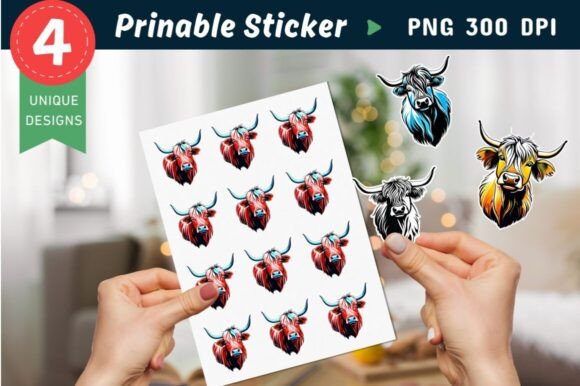
The initial visual impact of Cow Clipart, Cow Stickers, Cow Design, C is undeniably charming. It carries a whimsical, rustic mood that fits perfectly within current trends for farmhouse decor and boutique baby items. The lines are clean, and the silhouette is distinct, which is crucial when you are planning to convert a graphic into an embroidery file. A cluttered or overly complex image often results in a muddy stitch-out, but this design offers a solid foundation.
The layout suggests versatility. It isn't so detailed that it requires microscopic precision, nor is it so simple that it lacks character. For an experienced digitizer or a designer looking to create an applique design, this graphic provides excellent boundaries. The "C" element mentioned in the title hints at potential monogram integration, making it a strong candidate for personalized projects. However, since the product description confirms this is a 300dpi PNG with a transparent background, remember that this is a graphic source, not a pre-digitized stitch file. You will need to digitize it yourself or hire a professional to convert those pixels into satin stitch, fill stitch, or running stitch commands.
Real-World Application: From Screen to Sweatshirt
To truly test the viability of Cow Clipart, Cow Stickers, Cow Design, C, I envisioned a specific real-life scenario: a custom order for a local boutique needing a series of embroidered tote bags and toddler sweatshirts. The client wanted a cohesive look for their spring collection, focusing on pastoral themes.
For the tote bag design, the graphic's bold shapes would hold up well against canvas or heavy cotton. When digitizing for this application, I would recommend using a dense fill stitch for the cow's body to ensure durability, as tote bags undergo significant wear and tear. The transparency of the original PNG allows for easy placement on dark or light fabrics without worrying about white halos, provided the digitizing software handles the edges correctly.
Switching to sweatshirt embroidery, the approach changes slightly. Fleece and French terry have a looped fabric texture that can swallow small details. Here, the simplicity of Cow Clipart, Cow Stickers, Cow Design, C becomes an asset. By outlining the design with a slightly thicker satin stitch border, the image pops against the textured background. This makes it an ideal choice for baby embroidery projects where softness and clarity are paramount. Parents love seeing clear, recognizable characters on their children's clothing, and this design delivers that recognition factor without overwhelming the small chest area of a onesie or tee.
Navigating Technical Challenges and Fabric Constraints
While the design is promising, practical execution requires caution. Not every surface is friendly to every graphic. If you plan to use Cow Clipart, Cow Stickers, Cow Design, C on stretchy fabrics like jersey knits or performance wear, stitch density becomes the enemy. High-density stitching on stretchy material leads to puckering and distortion. In these cases, I strongly advise reducing the fill density and relying more on outline stitches or creating an embroidered patch that can be sewn on separately.
Curved surfaces present another hurdle. Applying this design to a cap or a structured hat requires careful manipulation of the pull compensation. The horizontal spread of the cow design might distort if not properly adjusted for the curvature of the crown. Similarly, if you are aiming for very small hoop size applications, such as a pocket logo on a chef's apron, you must ensure that any internal details (like eyes or spots) do not merge together. Tiny lettering or intricate corners often disappear under the thread; simplifying the graphic before digitizing is often necessary for miniature formats.
Dark fabrics also demand attention. Since the source file is a PNG, you are responsible for selecting the right thread colors. A standard black outline might vanish on a navy garment. Testing the design in black-and-white mockups before cutting a single thread is a non-negotiable step in my workflow to ensure contrast and visibility.
Commercial Viability and Brand Consistency
For Etsy sellers and small shop product creators, consistency is key to building trust. Using a cohesive graphic like Cow Clipart, Cow Stickers, Cow Design, C across various items—pillow covers, tea towels, and holiday gifts—creates a recognizable brand identity. The professional look of a well-stitched design directly influences customer perception. A sloppy stitch-out can ruin the perceived value of a handmade product, while a crisp, clean execution justifies a higher price point.
This graphic is particularly well-suited for commercial embroidery runs where repeatability is essential. Because the shapes are defined, the likelihood of variation between the first and the hundredth stitch is minimized, assuming your machine tension and stabilizer choices remain consistent. For holiday embroidery or seasonal collections, this design serves as a versatile base that can be accessorized with additional elements like flowers or text without looking cluttered.
Essential Designer Notes for Success
Before committing this design to a client project, here are my top recommendations for ensuring a flawless result:
- Test on Scrap First: Always stitch a sample on the exact same fabric weight and type you intend to use for the final product. This reveals issues with stabilizer choice or thread tension.
- Check Licensing: The product description mentions usage for items, but always confirm the specific license terms regarding digital embroidery file resale. Usually, you can sell the physical stitched item, but reselling the digitized file itself may be restricted.
- Stabilizer Selection: Match your stabilizer to the fabric. Use cut-away for stretchy knits to prevent distortion over time, and tear-away for stable wovens like cotton twill.
- Color Contrast: Verify that your chosen thread palette stands out against the garment color. Don't rely solely on the screen representation, as monitors display colors differently.
- Simplify for Size: If scaling down for small hoops, remove minute details that the needle cannot physically reproduce.
In conclusion, Cow Clipart, Cow Stickers, Cow Design, C is a robust graphic with high potential for transformation into beautiful textile art. It bridges the gap between digital graphics and tactile crafts effectively, provided the user understands the technical requirements of embroidery. Whether you are creating a personalized gift for a friend or stocking inventory for a craft business, this design offers the clarity and charm needed to engage buyers. Just remember: the quality of the final embroidery project depends less on the PNG itself and more on the skill and preparation of the person behind the machine.